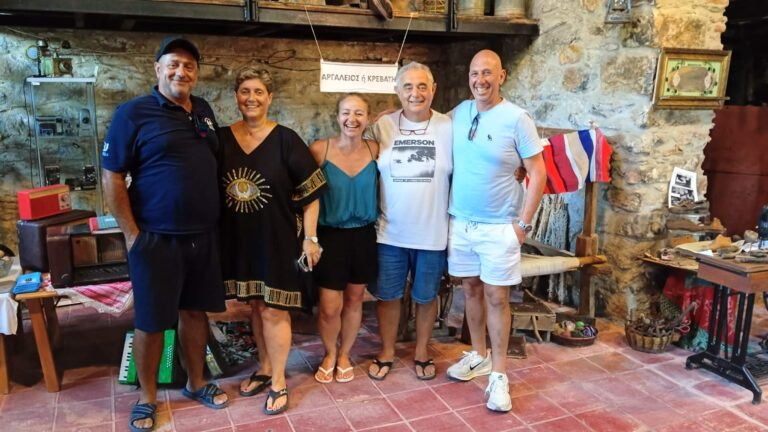
A group of fellow villagers who owned old objects and shared a love for their village founded the Palaiochori Folklore Association with the aim of creating a museum, so they could display and highlight items from the previous century—objects they and their parents had grown up with.
From the old olive mill to the Folklore Museum
The story of the place and the people who kept the village’s memory alive.
With donations from the residents and the Varvagianni distillery, their dream began to become a reality. At the same time, the community granted the old Papoutsanis olive mill as an exhibition space.
The factory was built in 1926 as a cooperative, on the initiative of twenty-two residents of Palaiochori. It was an important project for the local community and the production of the time.
The machinery was transported from Melinda using ropes tied to olive trees and pulled by hand, since there was no carriage road at the time. The very creation of the olive mill is itself a story of hard work and collective effort.
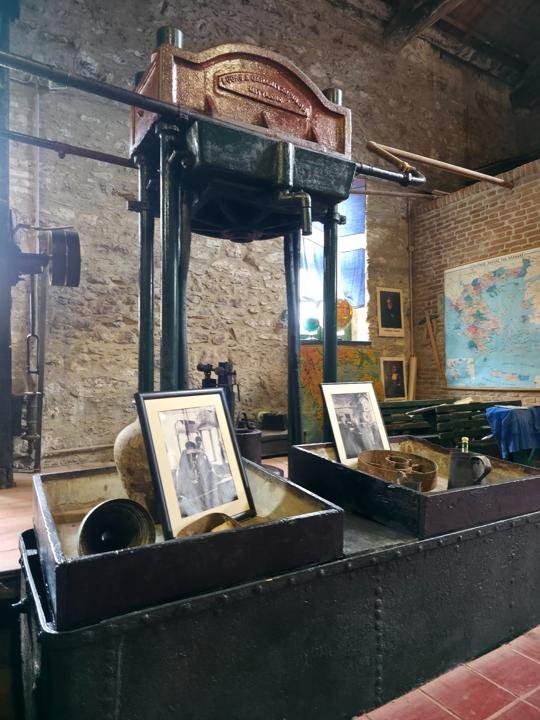
The olive mill operated with two presses and employed a total of twelve to fourteen people, serving as a lively center of work and production for the village.
The factory operated for only six years. In 1932, the cooperative was dissolved following acts of sabotage by wealthy private individuals, bringing its first course to a premature end.
After its dissolution, the factory was purchased by two private individuals and, after changing hands many times following World War II, eventually came into the ownership of G. Papoutsanis.
In the late 1980s, the then Minister of the Aegean, Mr. Sifounakis, restored industrial buildings, including our olive mill, and handed them over to the local communities.
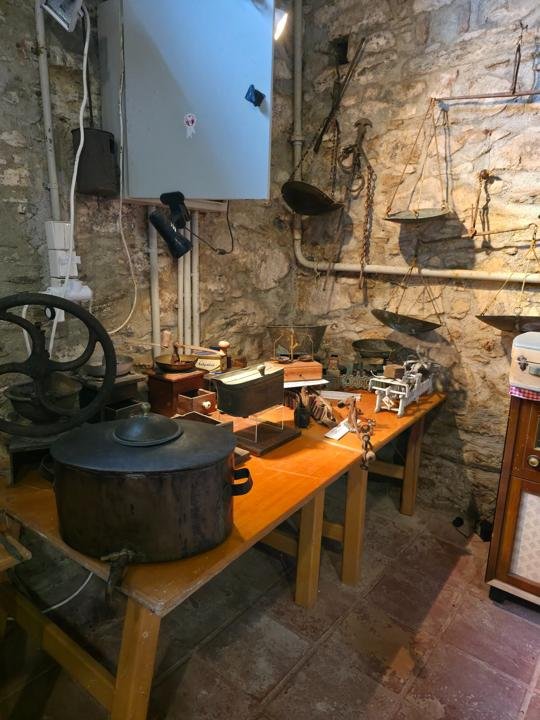
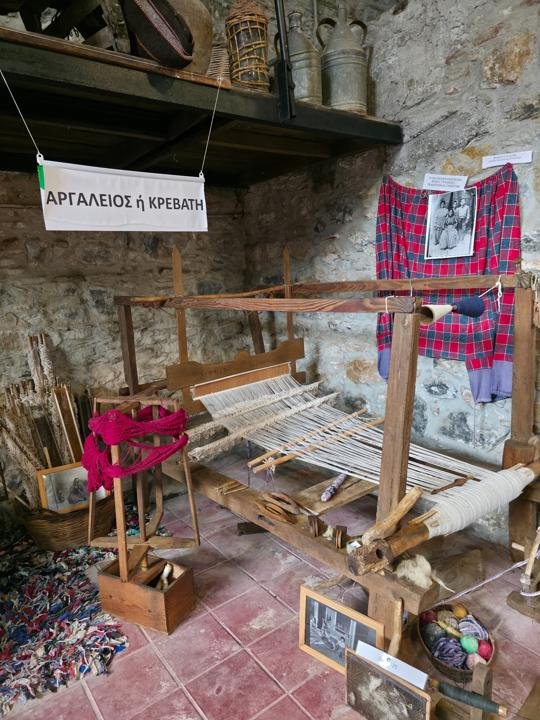
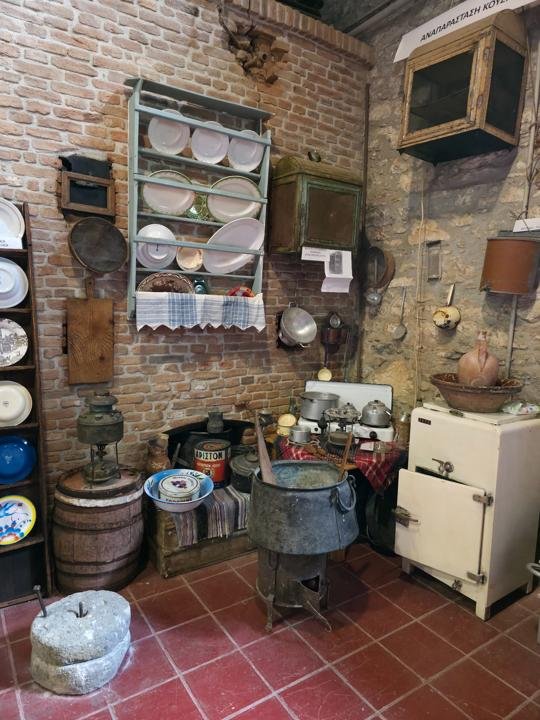
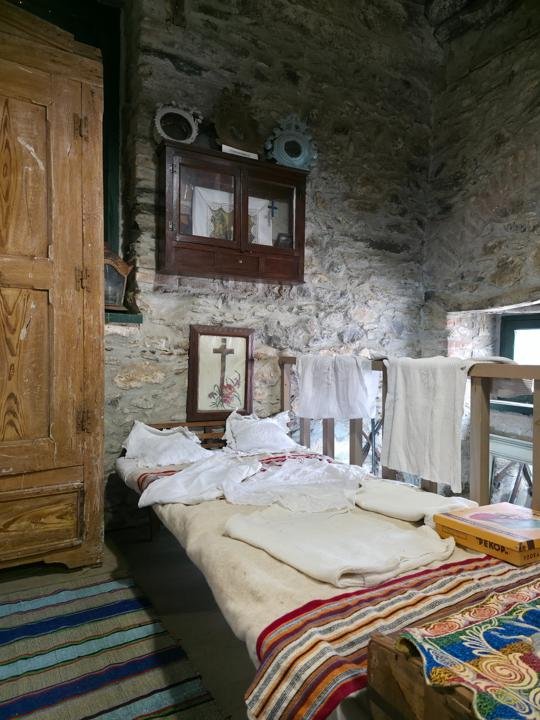
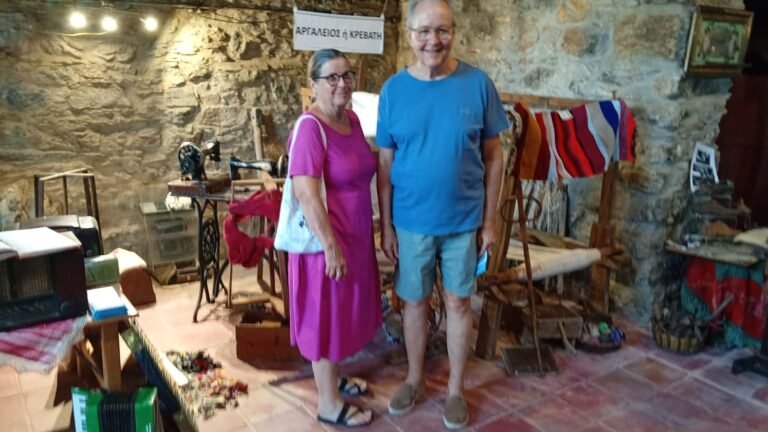
The old Papoutsanis olive mill now houses the Olive Oil and Folklore Museum. For the museum’s needs, the exhibits have been divided into thematic sections, such as the kitchen, the loom with woven textiles, the classroom, the bridal bed, farming tools, bread-making equipment, the cobbler’s workshop, lighting items, old books, printed materials and newspapers, café items, radios, a reconstructed traditional sitting room, and of course the olive mill machinery.
Explore the museum interactively
Discover the museum through a unique digital tour and get to know up close the traditional way of life, the objects, and the history of our region.
Start the tour
Folklore Museum
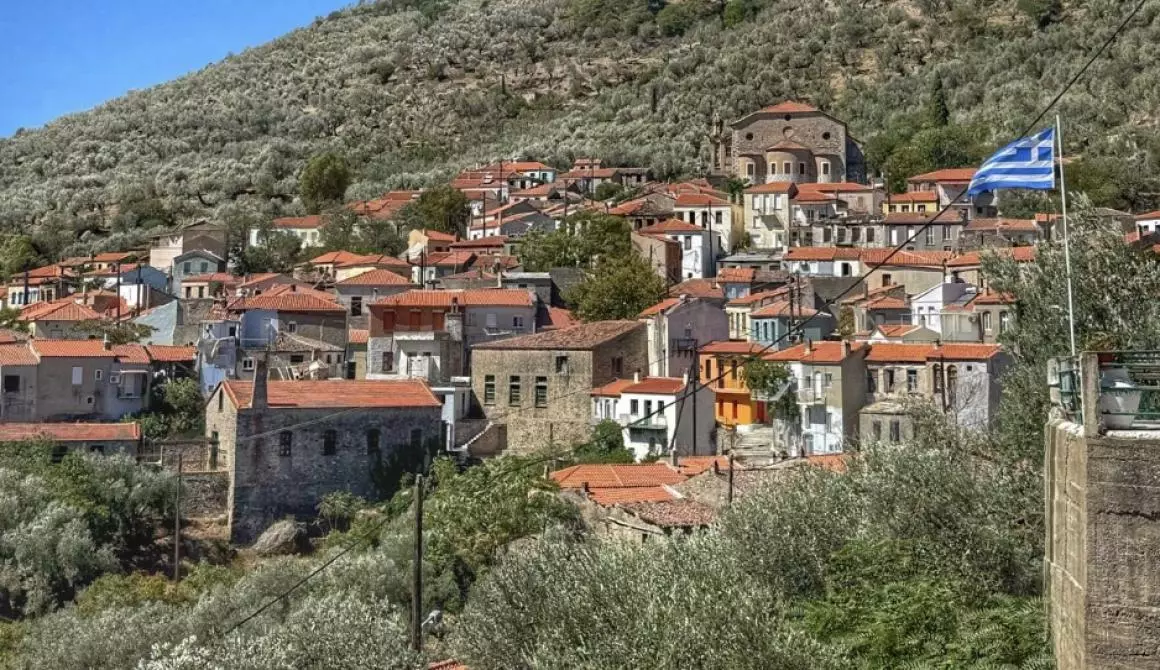
The Folklore Museum is located in Palaiochori, Lesvos, in a traditional settlement with a distinctive character and an authentic island atmosphere. Its location highlights the museum’s connection to the local history, everyday life, and the cultural heritage of the area.
LocationThematic Albums
Various
Loom
Engine Room / Tools
Kitchen